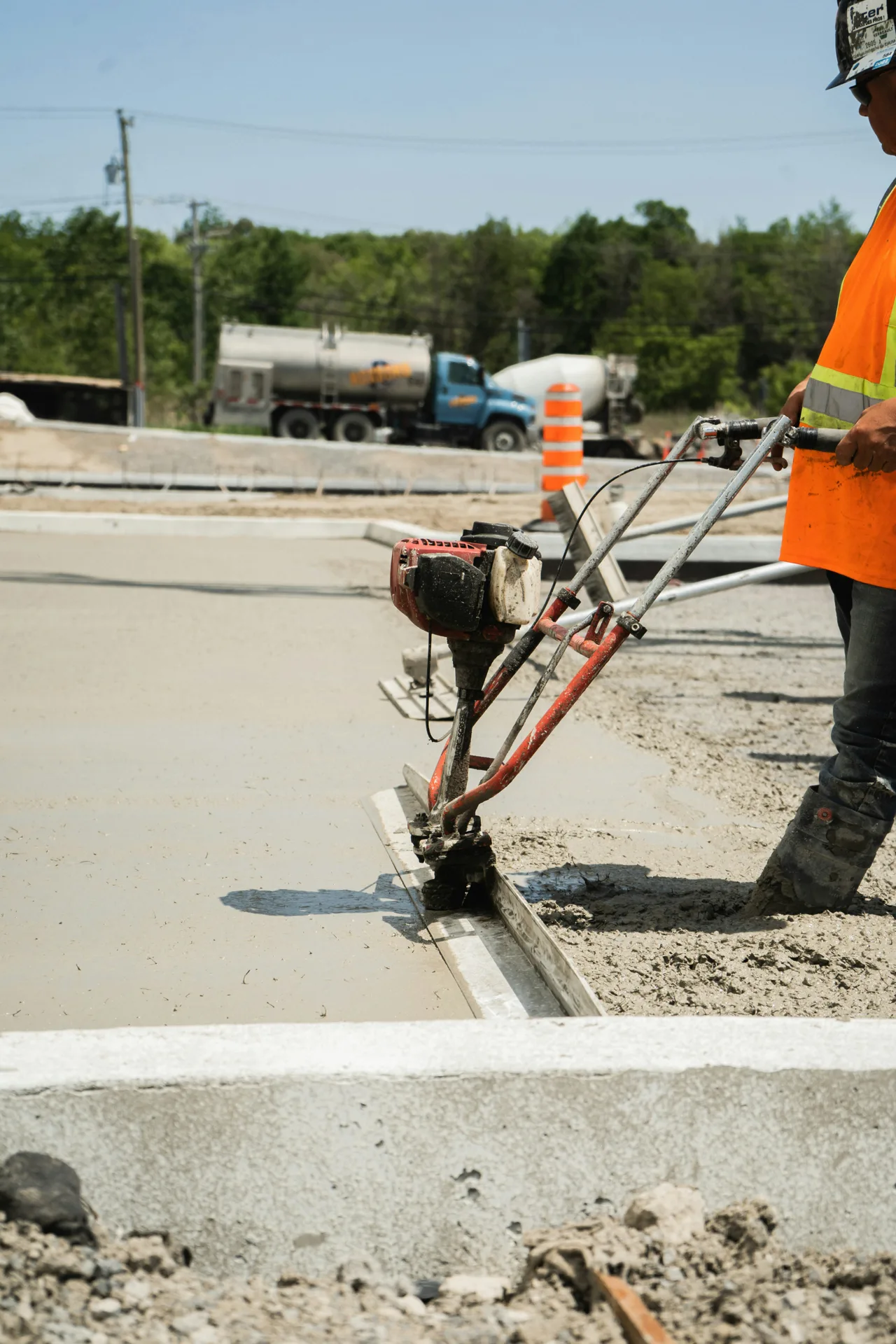
Trucks, Foot Traffic & Gear: Boston Site Concrete Built to Handle It
Every commercial lot has surfaces that take constant punishment. Loading dock aprons absorb trailer impacts. Sidewalks grip foot traffic in winter. ADA ramps meet compliance slopes. Equipment pads hold HVAC units and generators level. Boston Concrete builds each surface for the actual load it carries, with work scheduled around your operations and a free written estimate to begin.
A loading dock apron is not a parking lot. Trailers land on it with full weight, so the concrete is poured thicker, reinforced with rebar and wire, and jointed to absorb impact without cracking. A standard slab would spall to gravel in one winter.
Commercial sidewalks need to shed water and grip boots in snow, which means proper slope, broom finish, and drainage planning. ADA ramps and curb cuts are not eyeballed, they are formed and checked to slope and landing tolerances because a ramp that is close is still not compliant.
Concrete equipment pads for rooftop HVAC, generators, or transformers are sized and reinforced for the specific gear, then set dead level so the unit sits true. All four tie into the wider parking and commercial concrete strategy on the property.
Recent work
From site walk to handoff
The Sequence for Boston Site Concrete Pours
Walk the site and confirm loads
We inspect the lot, identify what each surface will carry (trailers, foot traffic, equipment weight), and plan the pour sequence around your delivery and operating schedule.
Excavate, base, and set drainage
Each area is excavated to depth, a compacted base is built to handle the load, and slopes and drainage are set before any forms go in.
Form, reinforce, and pour the slab
Surfaces are formed to spec, reinforced with rebar or wire for the load, then poured and finished. Dock aprons get thick pours and impact joints. Sidewalks get broom finish for grip.
Joint, cure, and release the site
Control joints are cut on layout, the concrete cures per schedule, and the site is handed back with a date it can carry traffic so operations resume without delay.
Precision pours
When Compliance and Level Are the Whole Job
ADA ramps and curb cuts cannot be approximate. They are formed and checked to slope, width, and landing tolerances because a ramp that is close is still not compliant. The concrete is poured to those exact numbers, not eyeballed or adjusted after the fact.
Concrete equipment pads for HVAC units, generators, or transformers are sized and reinforced for the specific gear they will carry, then set dead level so the equipment sits true and vibration is controlled. Both are small pours where getting the detail exactly right is the entire job, the same precision we bring to a loading dock apron.
Loading docks, ADA compliance, equipment pads and scheduling for site concrete.
A loading dock apron takes the impact of trailers landing on it, not just rolling traffic, so it is poured thicker, reinforced more heavily, and jointed for impact. A standard slab in that spot would crack and spall fast.
Yes. ADA ramps and curb cuts are formed and checked to the slope, width and landing tolerances that make them compliant. We build to those numbers, because a ramp that is close is still not compliant.
Yes. Concrete equipment pads are sized and reinforced for the specific gear they carry and set dead level so the unit sits true and vibration is controlled.
Yes. We phase the work so docks, sidewalks and access stay usable, and schedule pours around your delivery and operating windows. The plan is mapped with you before the first pour.
Yes. Loading dock repair and site concrete repair address the base, drainage or joint cause of the failure, then rebuild the surface to carry the load again.
Client reviews
What Boston Businesses Say About Their Site Concrete
Loading dock, sidewalks, ADA ramps or equipment pads. Tell us what the site needs and we will walk it, measure the loads, and send a written quote with a phasing plan that keeps your operations running.